
The Reality of ERP Deployment Expenditure
ERP implementation begins with the strategic integration of all business processes onto a single digital platform, and it can cost 300% more than the ERP software license alone. These secondary costs are mostly due to technical debt, data cleanup, and the “productivity dip” of an organizational change and employee training.
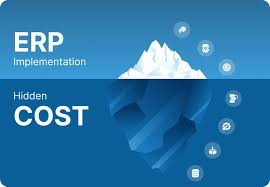
Modern ERP’s, with their sticker price, are good for distraction. The seat count and tier pricing are part of the project plan that procurement handles, but the real money loss occurs outside the project plan. To succeed, deployment needs to go beyond the “software-as-a-service” line item and factor in the structural changes within an organization. The budget is where its 90% of the journey, and choosing a vendor is 10%.
Technical Debt and the Data Migration Trap
Legacy systems collect and store “dirty data” such as inconsistent naming, duplicate records, and incomplete fields. Data silos are not only an IT issue – they are a balance sheet issue that plays out during migration.
1. Data Sanitization
Legacy spreadsheets cannot be “import”. It takes hundreds of man-hours to map data schemas and to scrub records. Garbage in, garbage out, is a true saying in the ERP world. Inaccurate data equals inaccurate new ERP reports or reports generated at a higher rate.
2. Customization Bloat
Technical debt is the cost of all those “vanity” features you’re asking for, which are little copies of the ineffective ways of doing things you’ve become accustomed to. These customizations typically cause issues during vendor updates and will be costly to have the developer remap APIs and stabilize the environment. Custom code is an ongoing, unscheduled tax that has to be paid to the IT department. It is painful to standardize processes to accommodate ‘out-of-the-box’ functionality, but it doesn’t run the risk of remaining an unscalable Frankenstein system in the long term.
The Human Capital Sinkhole
The most significant hidden expense is not a vendor invoice; it is the reallocation of your internal A-players.
3. Backfilling Internal Roles
The most competent department heads need to be in charge of implementation. But their day jobs don’t vanish. There’s a risk of having to pay temporary contractors to do your day-to-day business until you get your management in place to conduct UAT (User Acceptance Testing) and process mapping.
4. Post-Go-Live Hypercare
The reality comes the following week after “go-live. The productivity usually decreases by 25% when employees have to cope with new patterns for UI/UX. During this “hypercare” period, a dedicated team (for a premium consulting fee) is needed to troubleshoot errors and ensure that there is no paralysis at the operational level. Training is not something that can be done just once; it is an ongoing operating expense. If you overlook this dip, you will experience “change fatigue” and ultimately non-adoption, and you will lose your anticipated ROI.
Integration and Ecosystem Complexity
Modern ERPs are not in isolation. They need to connect with third-party logistics (3PL) software, CRM and PLM.
5. Middleware and API Management
When integrating ERP with the current tech stack, it may require a dedicated middleware layer or a custom API design. They’re not set in stone; they need continual monitoring and updating when the third-party vendor updates its documentation or security measures. Versioning updates can completely disrupt data flow without warning and require instant IT resources. Real-time inventory sync between multiple nodes is not as simple as it sounds.
The key to an ERP’s value to enterprise leaders is understanding that it is not a one-and-done solution, but a lived ecosystem. The best results are achieved by investing in the “people” and “data” layers, just as you would in software. When decision makers take the time to understand these 5 hidden costs, they can move beyond “fire fighting” to “digital transformation” and start seeing positive results that benefit their bottom line. This financial astuteness is absolutely crucial for efficient scaling.