
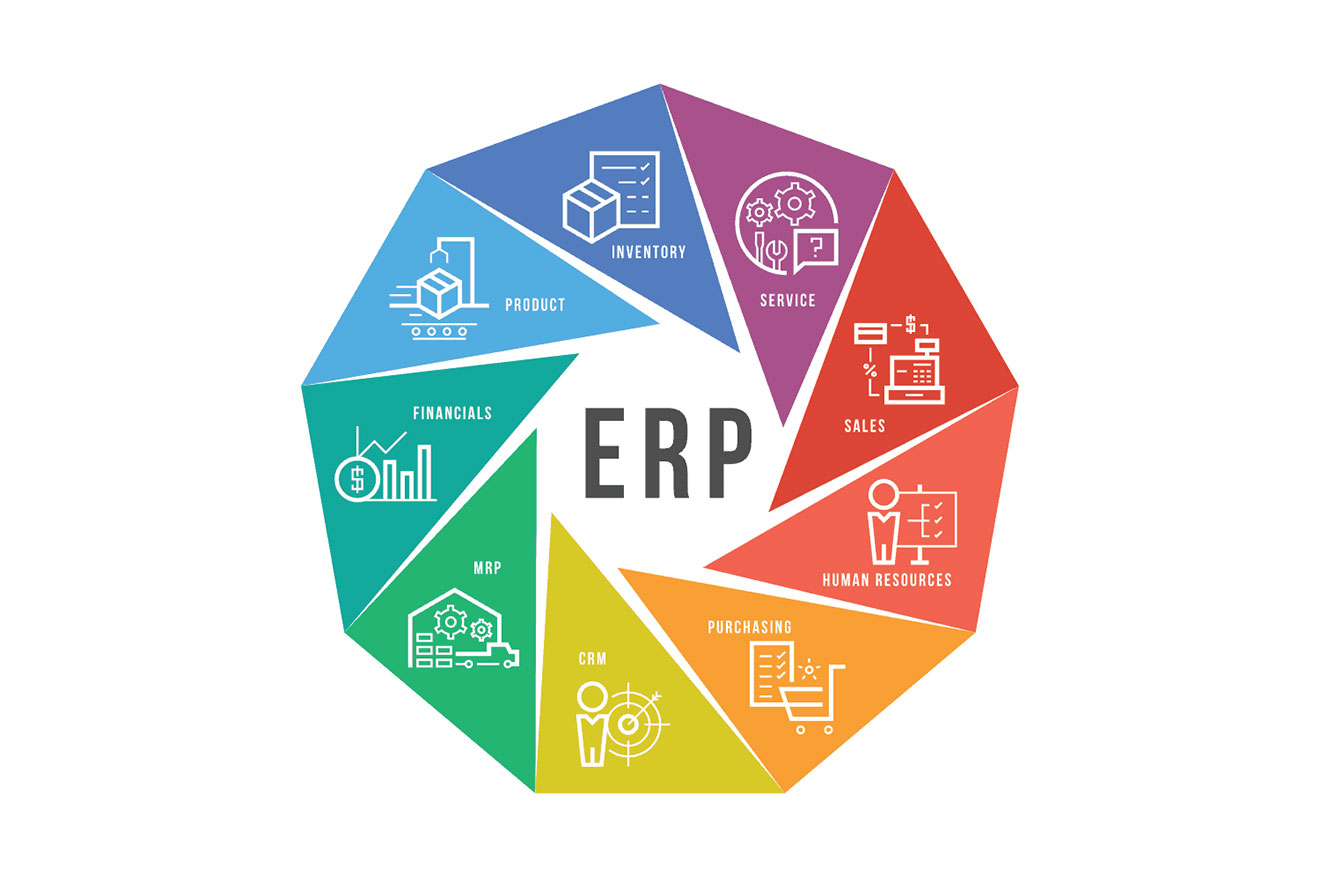
Enterprise Resource Planning systems are the ultimate development of the organizational management technology. In the present day, ERP systems are not just data storage and retrieval systems; they are the brain and nerve center of multinational companies, managing intricate processes and maintaining data consistency in high-speed environments where manual synchronization becomes impractical. These solutions enable a single, digital operating environment.
Defining the Core ERP System
ERP is an centralized software system that connects important business functions, like finance, human resources, supply chain, procurement and others, into one data source. It breaks down data silos by enabling real-time sharing of data between departments, improving data flow and enhancing operational efficiency and strategic decision-making through the use of a unified database system.
An ERP system is more of a “single source of truth” than just automation. In legacy systems, departments are typically disconnected from one another and rely on spreadsheets for reporting and reconciliation, which can result in discrepancies and errors. In today’s ERP architecture, Master Data Management (MDM) allows for a single customer record, inventory unit or financial transaction to be the same for anyone from the warehouse to the C-suite.
Functional Modules and Technical Architecture
An ERP system’s usefulness comes from its modularity. For certain verticals, including manufacturing, professional services, and retail, organizations can choose to deploy specific components in their target vertical, while providing a unified back-end integration through APIs and middlewares. Common core functional modules normally consist of:
- Financial Management: Automates general ledger, accounts payable/receivable, and fiscal reporting and compliance with multiple currencies and entities.
- Human Capital Management (HCM): Manages the employee lifecycle, from recruitment to onboarding, to payroll and performance tracking.
- Supply Chain Management (SCM): Manages products from procurement through to final delivery, leveraging predictive analytics to ensure products are in line and on time.
- Customer Relationship Management (CRM): Integrates sales pipelines with order fulfillment to provide a comprehensive view of customer interactions.
- Service-oriented firms: Ensure resource allocation, milestones and billing for projects to make them profitable and within time.
Deployment Models and Digital Transformation
The shift from ‘legacy’ on-premise systems to cloud-based SaaS-based systems has changed the way ERP is implemented. For highly-regulated industries, on-premise solutions give maximum control, while cloud ERPs offer scalability and quick deployment in the era of agility. This change lowers the Total Cost of Ownership (TCO) as there is no need for major maintenance on the hardware or manual version patching.
As with most technical solutions, it’s not simply about a technical installation, but a process that requires careful change management. The successful applications focus on Business Process Reengineering (BPR) to adapt software’s standard capabilities towards business objectives. Enterprise can then move historical data into the new environment using ETL (Extract, Transform, Load) protocols, and advanced Business Intelligence (BI) tools can provide actionable insights from Day 1. The digital transformation simplifies how companies respond to market changes and supply chain fluctuations.
Strategic Value for Executive Leadership
The ERP system is an important source of return on investment and competitive advantage for the executive leadership. Companies see substantial cutbacks in operational overhead, in cycle times, by bringing together different workflows. Having insights into Cash-to-Cash cycles and inventory velocity, in real time, gives CFOs better control over liquidity.
An ERP system is a strategic investment that equips your organization for scalability. When organisations grow with mergers or new business units in overseas markets, the rules and standards of an integrated ERP enable quick and effortless integration of new units. The system also provides centralisation of governance and automation of routine compliance processes, allowing human resources to devote more time to innovation instead of reconciliation. In today’s business world, an ERP is more than just a tool—it’s the backbone of an enterprise’s data-driven, sustainable growth.
2 responses to “What is an Enterprise Resource Planning (ERP) System?”
[…] ERP system is used to manage back-office processes like finance and supply chain while a CRM is used […]
[…] ERP migration is NOT a straightforward data transfer. Technical debt is a problem many stakeholders often overlook, but it must be managed to ensure successful deployment. But if you don’t account for architectural dependencies, you may be liable to serious system failures today. It’s not only a problem of project management, but also a problem of bad architecture. […]